




















How to Clean Dust Behind a Radiator in a Small Apartment
 08.07.2026

To clean dust behind a radiator, turn the heat off and let it cool, then slide a long radiator brush or a microfiber duster on a flexible rod down through the fins and along the wall. Vacuum what falls, wipe the floor and baseboard with a damp cloth, and finish with a slightly damp wipe of the reachable metal.
What you'll need
- A long, thin radiator brush (or a microfiber duster on a bendable rod)
- Vacuum with a crevice tool and, ideally, a HEPA filter
- Two microfiber cloths
- A spray bottle of plain water (or water with a drop of dish soap)
- An old pillowcase or a hairdryer/can of compressed air for blowing out fins
- A flashlight or your phone light
- Painter's tape and a small trash bag
Step by step
- Turn the radiator valve off and let it cool completely. Steam radiators get hot enough to burn, and dust bakes onto warm metal.
- Lay a cloth or the trash bag flat on the floor at the base to catch falling dust, especially if you have hardwood or a rug you don't want to re-vacuum twice.
- Shine your flashlight into the gap between the radiator and the wall so you can see where the dust actually sits, usually along the top lip and the bottom.
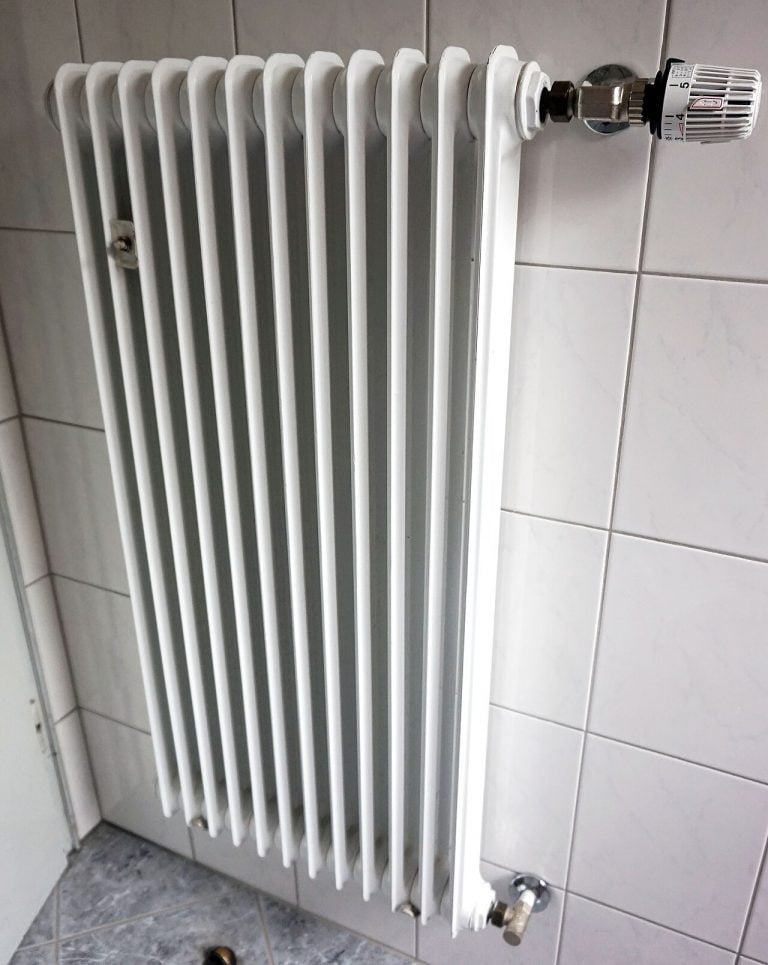
- Run the radiator brush straight down through the fins from the top, then pull it back up. Repeat across the whole length. Go slow so you drag dust down rather than flinging it into the room.
- Work the same brush into the gap behind the unit, sweeping side to side against the wall and baseboard.
- For packed dust between cast-iron sections, drape an old pillowcase behind the radiator and blow air through the front with a hairdryer on cool or compressed air. The pillowcase traps most of what comes out.
- Vacuum the fallen dust with the crevice tool, then vacuum the fins and the top surface.
- Wipe the reachable metal, the floor, and the baseboard with a lightly damp microfiber cloth. Follow with the dry cloth so no water sits on the metal.
What NOT to do
Don't spray cleaner or water directly into a hot or warm radiator; water on hot cast iron can crack enamel, and liquid inside the fins invites rust. Skip steel wool and abrasive pads on painted radiators, they scratch the paint and expose bare metal that then rusts. Don't soak an electric or hydronic baseboard heater, keep moisture away from any electrical element and wipe with a barely damp cloth only. Avoid jamming a stiff metal tool between cast-iron sections; you can chip the paint or bend thin fins on a convector. And don't blow dust around a closed room with a fan without a filter catching it, in a small NYC apartment with a window that may not open, it just resettles.
When to call a pro
DIY handles the visible dust and the reachable gap. But if your radiator is boxed in a built-in cover you can't remove, sits under a window sealed shut by decades of paint, or has years of caked grime packed deep between cast-iron sections, you may not be able to reach it safely without moving the unit, which is your landlord's or a plumber's job, not yours. If you'd rather hand off the whole apartment while you're at it, book apartment cleaning with CleanWhale and we'll get the radiators, baseboards, and the dust that collects behind them.
FAQ
How often should I clean behind a radiator?
In a heated NYC apartment, aim for once at the start of the heating season and once in spring. If you have pets or the radiator sits near a busy walkway, a quick brush-through every month keeps buildup from packing in.
Can I use a vacuum alone without a brush?
A crevice tool reaches the top and floor, but it usually can't pull dust off the back face or out from between fins. Pairing it with a thin radiator brush or a bendable duster gets far more out in one pass.
Does dust behind the radiator affect my heating?
A heavy dust layer can insulate the metal and slow how well heat moves into the room, so clearing it can help a sluggish radiator warm your space more evenly. It also cuts down on the burnt-dust smell you get the first time the heat kicks on.
What if I can't reach behind at all?
Try a microfiber duster on a flexible rod, which bends into the gap a rigid brush can't. If the radiator is bolted tight to the wall or enclosed, leave the deep-back cleaning to a pro rather than forcing a tool and risking a chip or a bent fin.
Related guides